Do cortisol supplements work? Sometimes, and modestly. Human trials of ashwagandha root extract show lower cortisol and stress scores in some adults, but results vary by product, dose and study quality. CortiSync, a seven-ingredient Sensoril formula, is one option to consider alongside sleep and stress habits.
Affiliate disclosure: we earn a commission if you buy through links to CortiSync, at no extra cost to you. Supplement statements on this page have not been evaluated by the FDA. Not medical advice.
In this guide
- Do cortisol supplements work? The short answer
- What cortisol does (and when a supplement is the wrong tool)
- What human trials show about cortisol supplements
- Ingredient by ingredient
- Where CortiSync fits
- Red flags in the marketing
- How to choose a cortisol supplement
- Safety, side effects and who should skip
- FAQ
Do Cortisol Supplements Work? The Short Answer
The honest answer is “it depends on the ingredient.” The best-studied option is ashwagandha root extract. Several placebo-controlled trials report lower cortisol, and a recent meta-analysis found a small but statistically significant drop.
The same analysis found no clear change in perceived stress. So a supplement may move a lab number without changing how you feel. That gap is why this guide separates what trials measured from what marketing implies.
So, do cortisol supplements work? For some people, in some trials, yes, but the effect is modest and depends on the product.
Think of a good cortisol supplement as a support tool, not a switch. It sits next to sleep, movement and stress habits, which remain the foundation. Our guide to lowering cortisol naturally covers those basics.

What Cortisol Does (and When a Supplement Is the Wrong Tool)
Cleveland Clinic describes cortisol as a steroid hormone made by the adrenal glands. It supports the stress response, blood sugar, inflammation, blood pressure and the sleep-wake cycle. Levels normally peak in the morning and fall in the evening (Cleveland Clinic).
So the goal is not zero cortisol. You need it. The goal is a healthy rhythm that is not stuck “on” because of chronic stress or poor sleep.
Persistently very high cortisol is a different matter. Cushing syndrome causes weight gain around the trunk, a rounded face, easy bruising and purple stretch marks (Mayo Clinic). It needs medical care, not a supplement (NIDDK).
A cortisol test of blood, urine or saliva helps doctors rule such conditions in or out, but it cannot identify the cause alone (MedlinePlus). If you recognize those symptoms, see a clinician first. Our list of signs of high cortisol can help you prepare questions.
What Human Trials Show About Cortisol Supplements
Do cortisol supplements work? Ashwagandha shows the strongest signal
In an eight-week, placebo-controlled study of 60 stressed adults, ashwagandha root extract at 250 mg/day and 600 mg/day reduced perceived stress and serum cortisol. Sleep quality also improved versus placebo (Salve et al., PMID 32021735).
Do cortisol supplements work better at a higher dose? In that trial the 600 mg/day group showed the stronger cortisol result, but it was a single small study, so treat it as a hint, not a rule.
A 2025 systematic review pooled randomized trials and reported a cortisol reduction of 1.16 µg/dL (95% CI 0.69 to 1.64 lower). It found no statistically significant effect on perceived stress (PMID 40746175).
The NIH Office of Dietary Supplements adds context. It notes most trials are small and short, usually 6 to 12 weeks, that products and doses vary widely, and that long-term effects are unknown (NIH ODS).
NCCIH says some preparations may help with stress and insomnia, while evidence for anxiety is unclear (NCCIH). Examine uses similar hedged language: ashwagandha “seems to reduce” cortisol (Examine).
| Evidence source | What it reports | Main caveat |
|---|---|---|
| Salve 2019 trial (60 adults, 8 weeks) | Lower serum cortisol and perceived stress at 250 and 600 mg/day; better sleep | Small, one extract, one study |
| 2025 meta-analysis (7 cortisol studies) | Cortisol down 1.16 µg/dL; perceived stress not significantly changed | Moderate heterogeneity between trials |
| NIH ODS review | Several placebo-controlled trials report lower stress and cortisol | Short trials, varied products, long-term effects unknown |
| NCCIH | May help stress and insomnia; anxiety evidence unclear | Small studies, rare liver injury reports |
In short, do cortisol supplements work in trials? Yes for cortisol markers, and less clearly for how stressed people feel.
L-theanine: a calmer-sleep signal, not a cortisol one
A four-week crossover trial gave 30 healthy adults 200 mg/day of L-theanine or placebo. Depression and trait-anxiety scores and sleep-quality scores improved after L-theanine (Hidese et al., PMID 31623400).
That trial did not frame cortisol as its main result, so we describe L-theanine as supporting calm and sleep rather than directly lowering cortisol.
So do cortisol supplements work through calm and sleep as well? Possibly, but that is a different pathway from cortisol itself.
The pattern across studies
Studies are short and small. Effects are modest and differ between products. That is why a supplement label, dose and extract type matter more than the word “cortisol” on the front.
Ingredient by Ingredient: What Each One Is Used For
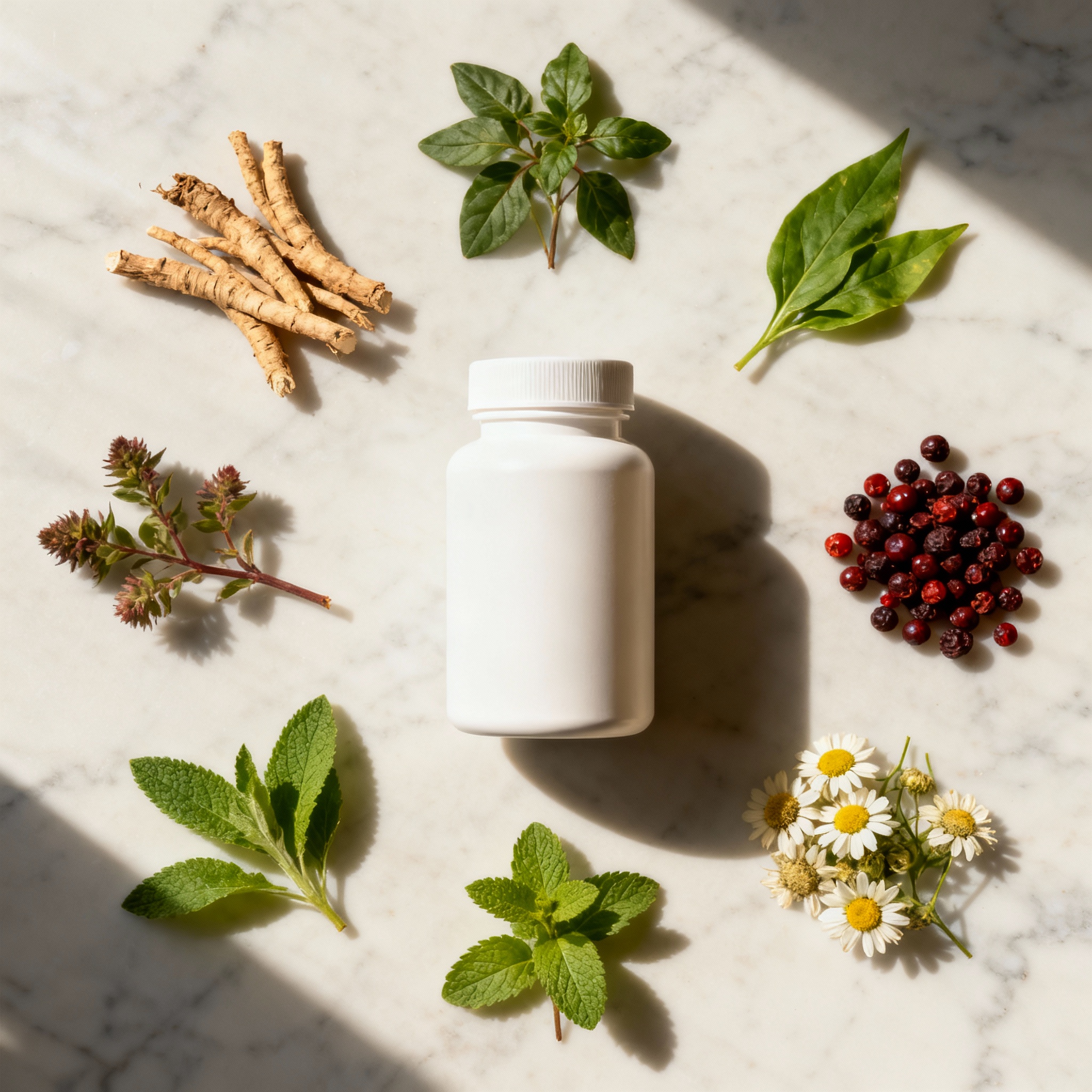
Most cortisol formulas blend adaptogens with calming compounds. The table lists the seven ingredients on the CortiSync label. Amounts are per two capsules, read from the official supplement-facts image on 2026-10-11.
| Ingredient | Label amount (2 capsules) | Typical role in formulas |
|---|---|---|
| Sensoril ashwagandha root extract | 300 mg | Adaptogen; the most-studied cortisol ingredient |
| Lemon balm herb powder | 150 mg | Traditional calming herb |
| Lichi fruit extract | 120 mg | Antioxidant plant extract |
| L-theanine | 100 mg | Amino acid linked to calm and sleep quality |
| Holy basil leaf extract (2% ursolic acid) | 100 mg | Traditional adaptogen |
| Magnolia bark extract | 100 mg | Traditional relaxation herb |
| Rhodiola rosea root extract (3% rosavins, 1% salidroside) | 50 mg | Adaptogen used for fatigue |
Do cortisol supplements work because of one ingredient or the whole blend? The trial data we found are for single ingredients, so a blend relies on extrapolation from them.
We did not review trials for lemon balm, lichi, holy basil, magnolia or rhodiola for this page, so we make no efficacy claims for them here.
Notice that doses are not identical to trial doses. The Salve trial used 250 or 600 mg/day of a different ashwagandha extract, while the label shows 300 mg of Sensoril. Do not assume equivalence. Our Sensoril vs KSM-66 comparison digs into that difference.
Where CortiSync Fits
CortiSync combines the seven ingredients above in one capsule formula. It is built around Sensoril, a branded ashwagandha extract. If you want a multi-ingredient option rather than ashwagandha alone, it is a reasonable one to evaluate. Read our CortiSync overview and dosage guide for details.

What the manufacturer states (official page, read 2026-10-11):
- Take 2 capsules daily with a meal; each bottle is a 1-month supply.
- Users may notice changes around the 2-week mark; the maker suggests starting with at least 3 months.
- A 67-day “test drive” money-back guarantee is offered.
- The page says one study showed a 24% cortisol reduction versus placebo, but it does not cite that study. We could not verify it, so treat it as a marketing claim.
Terms and prices change; check the official CortiSync page for current details.
Do cortisol supplements work for you? Start with your own context, because the answer depends on health status, medicines and habits.
| Who it may suit | Who should look elsewhere or ask a doctor first |
|---|---|
| Adults with everyday stress who want a multi-ingredient adaptogen formula and are already working on sleep and habits | Pregnant or breastfeeding women, people with liver or thyroid conditions, people on prescription medicines, and anyone with suspected Cushing syndrome or adrenal disease |
Do cortisol supplements work better as a blend than ashwagandha alone? We found no head-to-head trial that answers this, so choose a blend for convenience and not because it is proven superior.
Do Cortisol Supplements Work? Red Flags in the Marketing
Do cortisol supplements work as well as an ad suggests? Use these checks before trusting a claim.
- A percentage with no study attached. “Lowers cortisol by X%” means little if no paper, population, dose or duration is named. The 24% statement on the CortiSync page is an example: it is not cited, so we cannot verify it.
- A different ingredient’s study. Results for one ashwagandha extract do not automatically transfer to another extract or to a blend.
- Lab number versus feeling. The 2025 meta-analysis shows cortisol can fall without a clear change in perceived stress. Ask which outcome the claim is about.
- “Blocker” language. Cortisol is essential. A product that claims to block it should raise questions.
- No mention of side effects. Every active ingredient has them. NCCIH and NIH ODS both list cautions for ashwagandha.
Honest brands state the dose, the extract and what is still unknown. When you read a label, ask the simple question again: do cortisol supplements work for the outcome you care about, at the dose on this bottle?
What to track while you test a supplement
Keep a simple log for 8 to 12 weeks: bedtime, night wake-ups, daytime energy and a 1 to 10 stress rating. Change only one thing at a time, so you can tell what helped.
Share the log with your clinician at your next visit. That small habit answers “do cortisol supplements work for me?” far better than any advertisement.
How to Choose a Cortisol Supplement
Do cortisol supplements work better when you choose carefully? Use this checklist.
- Look for a named extract and dose. “Proprietary blend” with no amounts makes comparison with trials impossible.
- Match the dose to research. Trials often used 250 to 600 mg/day of ashwagandha root extract.
- Check third-party testing. The FDA does not approve supplements for safety and effectiveness before sale (FDA).
- Avoid “cortisol blocker” hype. See what the term really means in our cortisol blocker guide.
- Give it time. Trials lasted weeks, not days. Track sleep and stress ratings.
Want to compare options? Browse our best supplements to lower cortisol, best cortisol supplements and ashwagandha for stress pages.

Bottom line: do cortisol supplements work? Ashwagandha has the best human evidence for modest cortisol changes, while the rest of the evidence is thinner. Pair any supplement with sleep and stress habits, and speak with a clinician first if you have health conditions.
Safety, Side Effects and Who Should Skip
- Ashwagandha appears well tolerated for up to about 3 months; long-term safety data are lacking (NIH ODS, NCCIH).
- Reported effects include stomach upset, loose stools, nausea and drowsiness.
- Rare cases of liver injury have been linked to ashwagandha products; stop and seek care if you notice yellow skin or eyes, dark urine or severe fatigue.
- Avoid during pregnancy and breastfeeding unless a clinician says otherwise.
- Talk with a clinician or pharmacist if you take prescription medicines, have thyroid, liver or autoimmune conditions, or are scheduled for surgery.
Do cortisol supplements work safely over the long term? Data beyond about three months are lacking, so review use with a clinician.
Do not stop or change a steroid medicine without medical advice. Supplements are not a treatment for any condition.
Medical disclaimer: This article is educational and does not replace professional medical advice. These statements have not been evaluated by the Food and Drug Administration. These products are not intended to diagnose, treat, cure, or prevent any disease.
Reviewed by Dr. John Carter, PharmD, Clinical Pharmacist and Lead Scientific Reviewer, focused on supplement safety and drug-supplement interactions.
FAQ: Do Cortisol Supplements Work?
Do cortisol supplements work for everyone?
No. Trials show average effects in groups, and individual results vary. Sleep, stress and medical conditions all influence cortisol.
How long do cortisol supplements take to work?
Studies of ashwagandha ran 6 to 12 weeks. The CortiSync maker says users may notice changes around two weeks and suggests at least three months of use (official page).
What is the best-studied cortisol supplement ingredient?
Ashwagandha root extract has the most human trial data, though NIH ODS notes the studies are small and short.
Can a supplement lower cortisol more than lifestyle changes?
We found no evidence for that. Sleep, activity and stress management remain the foundation, and supplements are an add-on.
Is CortiSync a cortisol blocker?
Supplement makers use “blocker” loosely. CortiSync is an adaptogen blend; we do not claim it blocks cortisol or treats any condition.
Are cortisol supplements safe?
Ashwagandha appears well tolerated for about three months in studies, with rare liver injury reports. Ask a clinician if you have health conditions or take medicines.
Should I test my cortisol before taking a supplement?
A test helps doctors check for conditions such as Cushing syndrome or adrenal insufficiency. It is worth discussing if you have symptoms beyond everyday stress.
Where can I buy CortiSync?
Through the official CortiSync website, where current pricing and the 67-day guarantee terms are shown.
Visit the official CortiSync page

More Cortisol Resources
Still asking do cortisol supplements work? These pages go deeper.
- Cortisol blocker: facts before you buy
- Sensoril vs KSM-66 for cortisol
- How to lower cortisol naturally
- Best cortisol supplements
About the Author