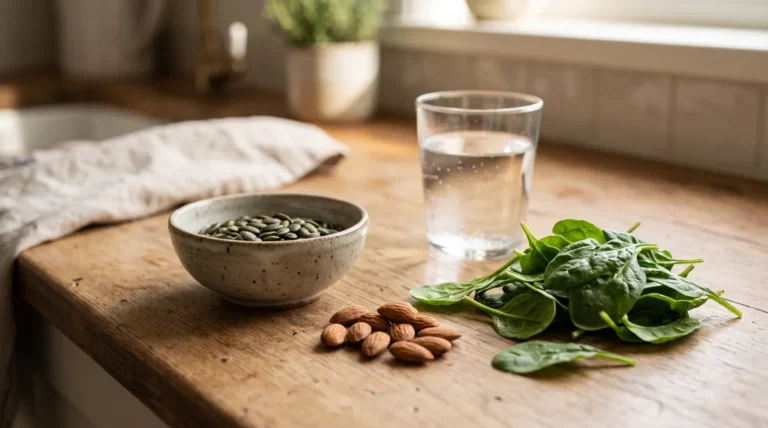
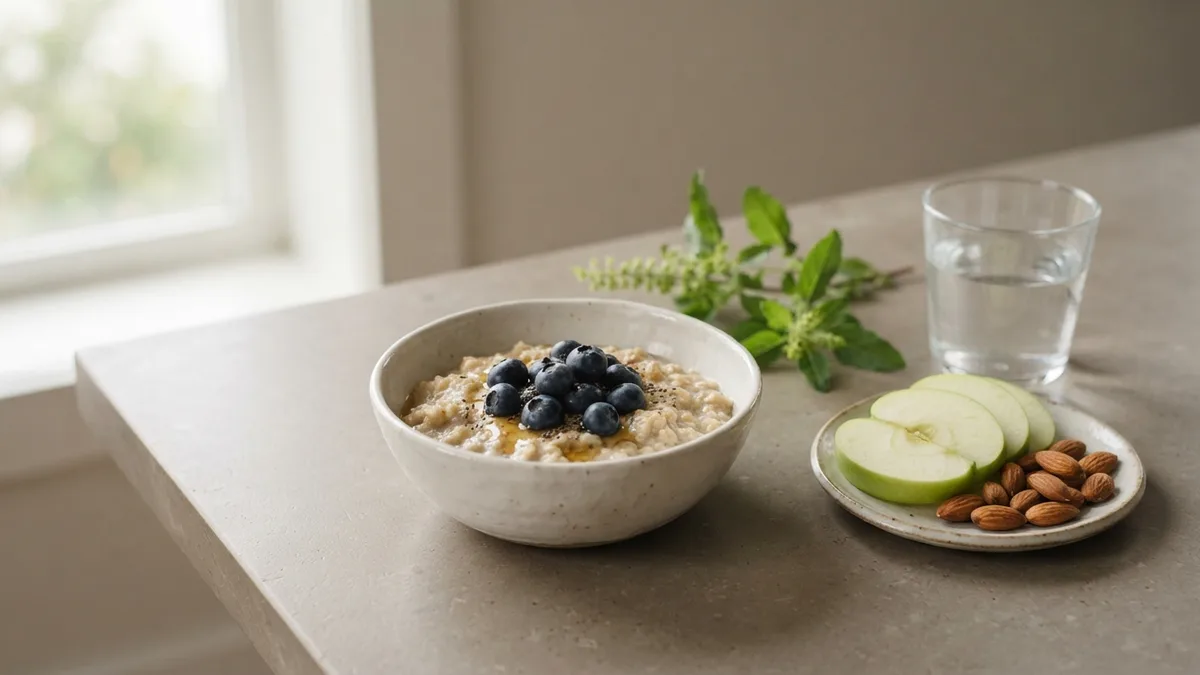
Cortisol and blood sugar: a simple breakfast still life.
This article is part of our Cortisol & Stress: The Complete Guide.
Answer first: no cortisol drinks or recipes have been shown to lower cortisol on its own. What the evidence does support is smaller: caffeine raises cortisol in the short term, so the timing and amount of coffee or tea matter, and drinks built from magnesium-rich foods can add to your food intake of that mineral without making any cortisol claim. Sleep, regular meals and stress habits matter more than any drink.
This page is educational and does not diagnose, treat, cure or prevent disease. It contains no affiliate links. Ask a clinician if you have symptoms such as ongoing fatigue, weight change or sleep problems, because they have many causes.
Do cortisol drinks work?
Search results and social posts promise “cortisol cocktails” and detox drinks. We found no human trial showing that any such drink lowers cortisol, so we do not give a recipe that promises it. Cortisol follows a daily rhythm and rises with stress, poor sleep, illness and caffeine, so one drink cannot be tied to a lasting change.
What caffeine does to cortisol
A double-blind crossover trial in 96 healthy adults (48 men and 48 women) tested 250 mg caffeine doses across the day. After five days without caffeine, the doses caused a clear rise in cortisol. In people who had taken 300 or 600 mg of caffeine a day for five days, the morning dose no longer raised cortisol, but the 1 PM dose did raise it again through the afternoon and evening. The authors concluded that daily caffeine users show a smaller cortisol response, not none. Source: Lovallo et al., Psychosomatic Medicine 2005, PubMed.
What this means in practice: if you drink a lot of coffee and feel wired, cutting back or moving your last cup earlier is a reasonable test. MedlinePlus says up to 400 mg of caffeine a day is not harmful for most people. Check your total from coffee, tea, energy drinks and pre-workout products.
A magnesium-food drink, with no cortisol claim
If you want a drink recipe, build it from foods that NIH lists as good magnesium sources. This is a food idea, not a treatment.
- 1 ounce roasted pumpkin seeds: 156 mg magnesium
- 1 ounce dry roasted almonds: 80 mg
- 1 cup plain soymilk: 61 mg
Blend the three with ice, and add fruit if you like. By NIH’s food values the drink supplies about 297 mg of magnesium from food. Food magnesium does not count toward the 350 mg upper limit that NIH sets for supplements. Skip soy if you avoid it, and skip nuts and seeds if you have an allergy. Source: NIH Office of Dietary Supplements, magnesium fact sheet.
We do not claim this drink lowers cortisol. For what small studies found about magnesium supplements and cortisol, see Magnesium and Cortisol: What 2 Human Trials Show.
Simple habits that matter more
- Caffeine timing: keep the total under 400 mg a day and avoid late-day cups if sleep is poor.
- Regular meals and water: long gaps between meals and heavy alcohol can leave you feeling worse, and they are easy to adjust.
- Sleep: a fixed bedtime is free and is one of the first things clinicians suggest.
What we do not claim
We do not claim that any drink, tea, powder or supplement lowers cortisol, burns belly fat or fixes “adrenal fatigue”. If you want to look at a cortisol-support product, read its label first and compare what the brand states with what published studies show.
FAQ
What drink lowers cortisol?
No drink has been shown to lower cortisol reliably. Cutting back on caffeine may reduce the cortisol rise it causes in the short term.
Does coffee raise cortisol?
Yes, in trials caffeine raised cortisol, with a smaller response in people who drink it daily.
Is a cortisol cocktail safe?
Because no recipe is proven to work, check each ingredient for allergies and medicine interactions, and do not use a drink to replace medical care.