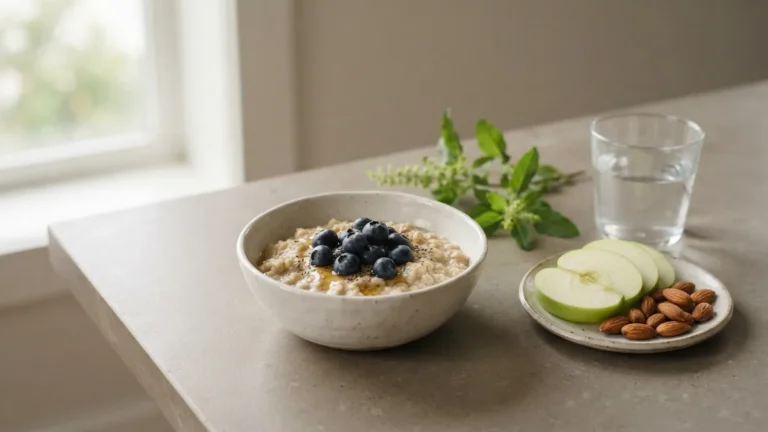
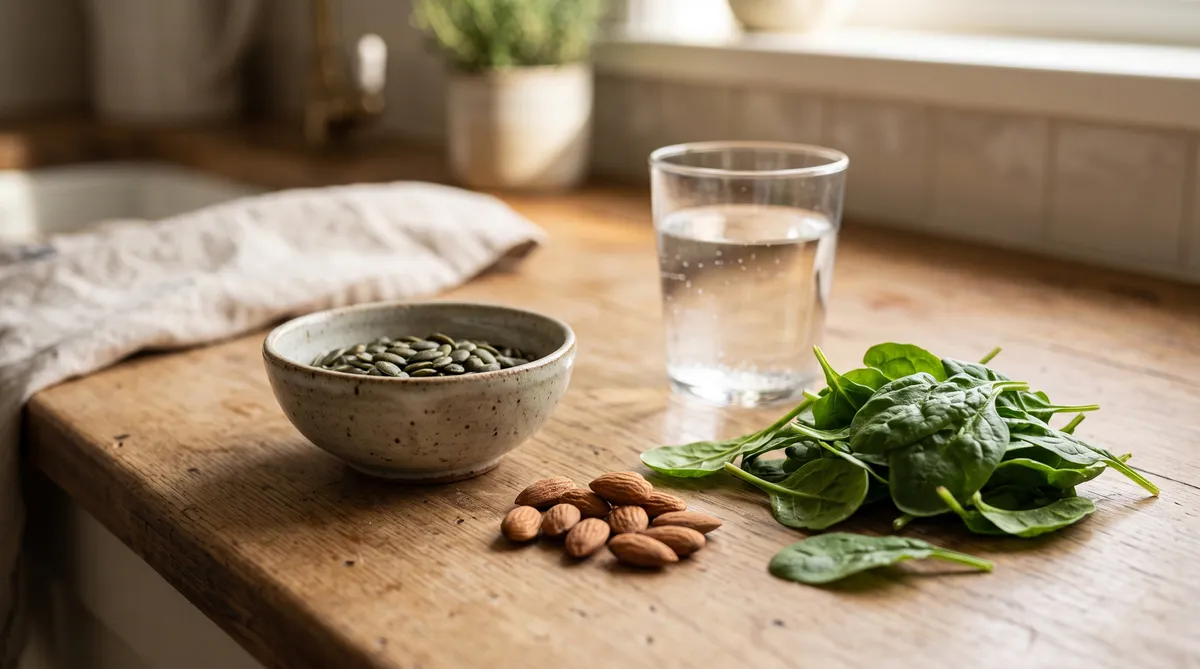
Magnesium-rich foods on a kitchen counter
Answer first: for magnesium for women, NIH lists a daily magnesium target of 310 to 320 mg for adult women from all sources (food, drinks and supplements), 350 to 360 mg in pregnancy, and an upper limit of 350 mg a day from supplements. Most of it should come from food. If you take a supplement, the Supplement Facts panel tells you the elemental magnesium per serving, and that is the number to use.
This page is educational and does not diagnose, treat, cure or prevent disease. It contains no affiliate links. Ask a clinician or pharmacist before you start a supplement, especially if you are pregnant, breastfeeding or take medicine.
How much magnesium do women need? Magnesium for women by age
The NIH Office of Dietary Supplements lists these Recommended Dietary Allowances, which count magnesium from all sources:
| Age | Women | Pregnancy | Breastfeeding |
|---|---|---|---|
| 14 to 18 years | 360 mg | 400 mg | 360 mg |
| 19 to 30 years | 310 mg | 350 mg | 310 mg |
| 31 to 50 years | 320 mg | 360 mg | 320 mg |
| 51 years and over | 320 mg | n/a | n/a |
Source: NIH Office of Dietary Supplements, magnesium fact sheet.
What is the upper limit for supplements?
NIH sets a Tolerable Upper Intake Level of 350 mg a day for magnesium from supplements and medicines for adults and for ages 9 and up, including during pregnancy and breastfeeding. Food magnesium does not count toward this limit. The limit exists because high supplement amounts can cause diarrhea, nausea and cramping, and very high intakes can cause serious harm, especially when the kidneys do not clear magnesium well.
Add up magnesium from every product you use. Some multivitamins, sleep blends and antacids contain it.
How to read a magnesium label
A front label that says “500 mg” may describe the whole magnesium compound or a serving of several capsules. NIH says the Supplement Facts panel declares the amount of elemental magnesium, not the weight of the whole compound. Check the serving size, the elemental magnesium line and the percent Daily Value (420 mg for adults). Our magnesium label guide walks through the steps.
Where women can get magnesium from food
NIH lists pumpkin seeds, chia seeds, almonds, spinach, cashews, peanuts, soy milk, black beans, edamame, peanut butter and shredded wheat among good sources. Food first keeps you well inside the limits.
Who should be careful
- Pregnancy and breastfeeding: needs differ, so ask your clinician before taking a supplement.
- Kidney disease: the kidneys clear extra magnesium, so supplements carry more risk.
- Some medicines: NIH notes that magnesium can reduce the absorption of bisphosphonates and some antibiotics, and some diuretics and acid-reflux drugs change magnesium levels. Ask a pharmacist about timing.
What we do not claim
We do not claim that magnesium treats period symptoms, mood, sleep problems or stress in women. The NIH fact sheet does not list these as established uses, and we found no source on this topic that we trust enough to quote. For the small studies on magnesium and the stress hormone cortisol, see Magnesium and Cortisol: What 2 Human Trials Show.
FAQ
How much magnesium should a woman take daily?
NIH lists 310 to 320 mg a day for adult women from all sources, and 350 to 360 mg in pregnancy. Most people reach this through food. The upper limit for supplements alone is 350 mg a day.
Is 500 mg of magnesium too much?
It depends on what the 500 mg is. If it is 500 mg of elemental magnesium from supplements, it is above the NIH limit of 350 mg. If it is the weight of a compound that holds less elemental magnesium, the panel’s elemental figure is the one to check. Ask a clinician before going above 350 mg.
Can I take magnesium while pregnant?
Needs rise slightly in pregnancy, and the supplement limit stays at 350 mg a day. Talk to your clinician first.