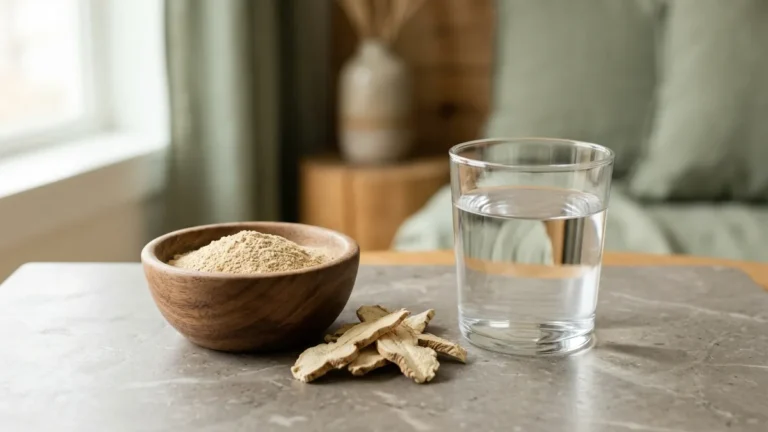
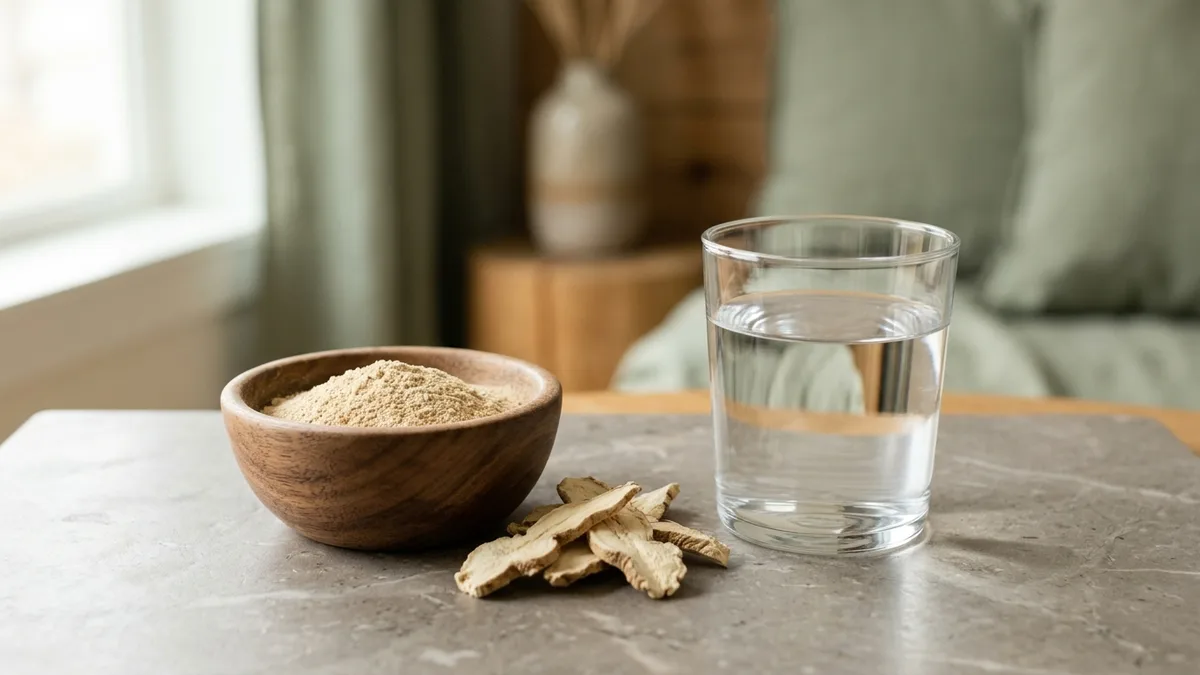
Tongkat ali root extract powder and dried root slices.
This article is part of our Male Fertility: The Complete Guide.
Short answer: Does tongkat ali fertility support hold up? Only partly. The one human fertility study on a standardized tongkat ali extract was uncontrolled: 350 men started, 75 finished the first three months, and no placebo group is described. The better-designed trials look at testosterone and erections, not pregnancy. If you still want to try a formula while you get proper testing, Fertility Factor 5 is the tongkat ali product we track here.
Affiliate disclosure: we may earn a commission from links on this page at no extra cost to you. This does not change what we write.
By Healthy Supplements Editorial Team | Last reviewed 27 October 2026
On this page
Tongkat ali, also sold as Eurycoma longifolia or Malaysian ginseng, is one of the most repeated names in male-fertility marketing. The tongkat ali fertility pitch is simple: a Southeast Asian root, a traditional reputation, and a modern extract with a study behind it. We opened that study, and the others that sit behind the claim, to see what they actually measured. If you are new to the topic, our male fertility guide is the best starting point.
The short version of our reading is that tongkat ali fertility evidence in men is thin, mostly uncontrolled, and easy to overstate. That does not make the herb useless, and it does not make it dangerous. It means the honest answer sits between a sales page and a dismissal, and the details matter.
What the tongkat ali fertility studies actually are
Before any numbers, it helps to see the whole evidence base in one place. We opened each abstract below on 27 October 2026 through Europe PMC. The table keeps design and caveat next to every result, because a result without its design is how supplement claims get inflated.
| Study | Design | What was measured | Result as reported | Main caveat |
|---|---|---|---|---|
| 2010 idiopathic infertility study (PMID 20348942) | 350 men started 200 mg a day of a standardized water-soluble extract; 75 completed the first 3 months; no control group described | Semen volume, concentration, normal shape, motility | Authors report significant improvement and 11 spontaneous pregnancies (14.7% of the 75) | Uncontrolled; 275 men did not complete the first cycle |
| 2012 late-onset hypogonadism study (PMID 21671978) | 76 of 320 patients took 200 mg a day for 1 month; no placebo group described | Ageing Males Symptoms score, serum testosterone | Reported significant improvement; normal testosterone rose from 35.5% to 90.8% of patients | Not a fertility outcome; short; uncontrolled |
| 2015 meta-analysis of randomized trials (PMID 26365449) | 2 trials, 139 participants, tongkat ali versus placebo | Erectile function (IIEF-5) at week 12 | Pooled difference 0.91 (95% CI -1.50 to 3.33), not significant; 2.15 in men with lower baseline scores | Only two trials; high heterogeneity |
| 2021 randomized trial (PMID 33541567) | 45 men with age-related androgen deficiency, 6 months, double-blind, 200 mg or placebo, with or without training | IIEF-5, Aging Male Scale, total testosterone | Both interventions improved; the strongest results were in the training plus tongkat ali group | Small; combined with exercise; not fertility |
| 2017 systematic review (PMID 28259255) | 150 articles screened, 11 human studies met criteria | Male sexual health outcomes | 7 studies showed an association with efficacy and 4 did not show sufficient effects | Mixed designs; studies published 2000 to 2014 |
| 2013 rat study (PMID 23261482) | Male rats given a standardized fraction or the aqueous extract by mouth | Sperm concentration, hormones, tissue changes | Sperm concentration increased versus control animals | Animals, not men |
Read as a whole, the tongkat ali fertility literature has one human sperm study without a control arm, a handful of testosterone and erection studies, and animal work that points in an interesting direction. None of it is a pregnancy trial against placebo.
The 2010 tongkat ali fertility study, line by line
This is the study every tongkat ali fertility page leans on, so it deserves a careful look. According to its abstract, researchers gave 350 men from sub-fertile couples with idiopathic infertility 200 mg a day of a proprietary standardized, water-soluble extract and planned semen analyses every three months for nine months. Only 75 of the 350 completed one full three-month cycle. In those 75, the authors report significant improvement in all semen parameters and 11 spontaneous pregnancies, which the abstract gives as 14.7%.
Three things limit what that tongkat ali fertility result can tell you. First, the abstract describes no placebo or control group, so there is no way to separate the extract from chance, the passage of time, or couples changing habits once they start a programme. Second, only about one man in five completed the first cycle, and we do not know whether the men who left had different results. Third, sperm counts fluctuate naturally from one sample to the next, which is exactly why a control group exists.
None of that means the finding is wrong. It means it is a signal worth testing, not a conclusion. A properly controlled trial would show whether the same extract beats placebo on sperm parameters and, more importantly, on pregnancy.
Testosterone and erection trials: the better-designed part
The stronger human data on tongkat ali are about testosterone and sexual function. In the 2021 trial of 45 men with age-related androgen deficiency, the 6-month design was double-blind and placebo-controlled, and men who took 200 mg of the extract while following a training programme had the clearest gains in erectile function and total testosterone. Because that group also exercised, the trial cannot say how much came from the herb alone.
The 2015 meta-analysis pooled only two randomized trials with 139 participants. The overall difference in IIEF-5 at week 12 was not significant, but men with lower starting scores improved by 2.15 points on average. The authors concluded the extract may have a clinical effect and that more trials are needed, which is about as far as the data allow.
The 2017 systematic review is the most generous summary: of 150 articles, 11 human studies were included, 7 reported an association with efficacy and 4 did not show sufficient effects. For tongkat ali fertility specifically, that mixed picture is a reason for curiosity, not for confidence. Higher testosterone or better erections also do not equal better sperm, so these trials cannot be read as tongkat ali fertility evidence.
Animal data: interesting, but not a human result
The most encouraging tongkat ali fertility signal comes from rats. In the 2013 study we opened, male rats given 25 mg per kg of a standardized fraction, or 250 mg per kg of the aqueous extract, had higher sperm concentration than control animals, and the authors link the effect to the hypothalamic-pituitary-gonadal axis. That is a mechanism worth investigating. It is not evidence that the same dose, scaled to a man, changes sperm or pregnancy rates.
When a product page leads with traditional use and rat data, the fair reading is that tongkat ali fertility research is at an early stage. Rat data are where most tongkat ali fertility claims begin, and plenty of compounds move rat sperm counts without ever helping men conceive.
The bigger picture: what supplements do for pregnancy
To judge tongkat ali fertility claims fairly, it helps to know how the whole category performs. A 2025 systematic review and meta-analysis in Nutrients (PMID 40431450) pooled randomized, placebo-controlled trials of dietary supplements in male infertility that lasted at least 12 weeks. Of 3,137 articles identified, 50 were included. It found no effect on pregnancy or live birth. Zinc with folic acid and multi-ingredient supplements improved sperm concentration, selenium, carnitine and coenzyme Q10 improved motility, and alpha-lipoic acid improved normal morphology, while vitamin D, vitamin E and omega-3 fatty acids did not improve sperm parameters. Most studies had some concerns or high risk of bias and certainty was generally low or very low.
The abstract does not name tongkat ali among the supplements it grouped, so we cannot say how that review would have rated it. What the review does show is the standard any tongkat ali fertility claim will eventually meet: placebo-controlled, at least 12 weeks, with pregnancy as an outcome. We walk through that review in full in do male fertility supplements work, and our male fertility vitamins evidence check covers the individual nutrients.
Tongkat ali fertility products: safety, dose and sourcing
We found little formal safety work in our search, so the most useful safety information is general. The NCCIH notes that supplement labels may not match what is inside the product and that terms such as standardized, verified or certified do not guarantee quality or consistency (NCCIH on using supplements wisely). The FDA states that supplements are not approved for safety or effectiveness before sale and that manufacturers are responsible for evaluating the safety and labeling of their products (FDA dietary supplements).
One 2025 case report (PMID 41080360) describes a 71-year-old man who developed new-onset atrial flutter after starting tongkat ali. The authors presumed a link because of timing and because other causes were ruled out, and call it the first documented case. One report cannot establish cause, but it is a fair reason to speak to a clinician first if you have a heart-rhythm condition or take heart medicines.
Tongkat ali fertility formulas often contain other ingredients, and those have their own limits. NCCIH says Asian ginseng most often causes insomnia, may lower blood sugar, and may interfere with blood clotting (NCCIH on Asian ginseng). The NIH Office of Dietary Supplements lists an upper limit of 40 mg a day of zinc from all sources, with excess lowering copper (ODS zinc fact sheet), and 400 mcg a day of selenium, with garlic breath, hair loss and brittle nails among early signs of excess (ODS selenium fact sheet). Add up everything you take, not just one bottle.
| Check | Why it matters for tongkat ali fertility products |
|---|---|
| Extract named and standardized | A named extract lets you compare the product with the one in the studies |
| Per-serving milligrams printed | Without amounts you cannot tell whether you are near the 200 mg a day used in the studies |
| Zinc and selenium against the upper limits | Stacking with a multivitamin can push you past 40 mg of zinc or 400 mcg of selenium |
| Third-party testing or a certificate | NCCIH warns that labels may not match contents |
| Your medicines and heart history | Case reports and ginseng interactions are reasons to ask first |
Where Fertility Factor 5 fits, using only what the manufacturer states
If you decide to try a tongkat ali fertility formula, Fertility Factor 5 is the one we track. We read the official page on 27 October 2026. The manufacturer states it contains LJ100, described as a patented extract of Eurycoma longifolia, plus Panax ginseng, zinc, selenium and BioPerine, and that it matches the 200 mg a day of LJ100 used in the studies it cites. The page does not print a per-serving milligram amount for LJ100 or for any other ingredient, so the Supplement Facts panel is where to check.
The page offers a 67-day money-back guarantee, described as 60 days plus a week for return shipping, with shipping and handling excluded from the refund. It lists no price on the page we read, and it recommends a semen analysis after at least three months. Two things lower our confidence in the marketing: the page’s own accounts of how many couples conceived in which period do not agree with each other, and its return instructions differ between sections. We therefore rely on the published studies above, not the page’s summary of them.
In plain terms, Fertility Factor 5 is a reasonable product to consider if you want a tongkat ali fertility formula with a stated extract, a refund window and a plan to retest, as long as you treat this tongkat ali fertility option as an add-on to medical testing and not a replacement. Our does Fertility Factor 5 work review, the ingredient breakdown, the ingredients review, reviews roundup and the comparison with other formulas go deeper.
See Fertility Factor 5 on the official page
What to do before you try any tongkat ali fertility product
Men are the only cause or a contributing cause of infertility in about 40% of couples, according to the NICHD, and the most common problems involve how the testicles work, with varicocele the most common cause of low sperm count (NICHD on male infertility causes). Those are causes a herbal extract is not designed to fix, so whichever tongkat ali fertility product you consider, the baseline testing comes first.
MedlinePlus lists the usual workup: sperm testing, a physical exam, hormone blood tests, sometimes ultrasound, and rarely a biopsy; causes include infections, hormone problems, heat exposure, smoking, heavy alcohol use and certain medicines (MedlinePlus on male infertility). A baseline semen analysis before you start also gives you something to compare against. Our natural fertility guide, lifestyle changes and cortisol and fertility pages cover what you can change alongside testing, and what is DIM explains another ingredient men ask about.
The verdict on tongkat ali fertility
Tongkat ali fertility support is plausible, not proven. The only human sperm study we found had no control group and lost most of its men before the first retest, the controlled trials measure testosterone and erections, and the largest supplement review found no effect on pregnancy for the category. If you try it, buy a product that names its extract and amounts, stay below upper limits, tell your clinician, and judge it by a repeat semen analysis, not by how you feel.
Check Fertility Factor 5 and the 67-day guarantee
Tongkat ali fertility: questions people ask
Does tongkat ali improve male fertility?
The evidence is limited. A 2010 study of a standardized extract reported improved semen parameters and 11 spontaneous pregnancies among 75 men who completed the first three months, but the abstract describes no control group and 275 of 350 men did not complete that first cycle. Placebo-controlled trials we opened measured testosterone and erectile function, not pregnancy.
What dose did the tongkat ali fertility studies use?
The 2010 fertility study, the 2012 late-onset hypogonadism study and the 2021 randomized trial all used 200 mg a day of an extract. The Fertility Factor 5 page states that its LJ100 content matches the 200 mg used in studies, but it does not print a per-serving amount (page read 27 October 2026).
How long before tongkat ali fertility changes show on a semen analysis?
The 2010 study re-tested every three months, and the manufacturer suggests a semen analysis after at least three months. The 2025 supplement review only counted trials of 12 weeks or longer. Ask your clinician when to repeat the test rather than guessing.
Is there a placebo-controlled tongkat ali fertility trial for sperm?
In our Europe PMC search we did not find one. The placebo-controlled trials we opened looked at erectile function and testosterone in men with age-related androgen deficiency.
Is tongkat ali the same as testosterone therapy?
No. The 2012 study measured testosterone in men with late-onset hypogonadism and reported improvement, but it described no placebo group. Low testosterone needs a clinician evaluation, and a supplement is not a substitute.
Is tongkat ali fertility support safe?
We found limited formal safety data. One 2025 case report describes atrial flutter in a 71-year-old man after he started tongkat ali, with a presumed link. Talk to a clinician first if you have a heart-rhythm condition or take medicines.
What is in Fertility Factor 5?
The manufacturer states it contains LJ100 (a patented Eurycoma longifolia extract), Panax ginseng, zinc, selenium and BioPerine, with a 67-day money-back guarantee. The page prints no per-ingredient milligram amounts, so check the Supplement Facts panel (page read 27 October 2026).
Can I take extra zinc or selenium with it?
Check your total. The NIH upper limit for adults is 40 mg a day of zinc and 400 mcg a day of selenium from all sources, so a multivitamin on top of a fertility formula can add up.
Why do tongkat ali fertility pages disagree on results?
Many quote the 2010 study without saying it was uncontrolled or that only 75 of 350 men completed the first cycle. The Fertility Factor 5 page itself gives conflicting accounts of when couples conceived.
Should I see a doctor before trying tongkat ali fertility products?
Yes. Men are the only or a contributing cause in about 40% of infertile couples, and the usual workup includes a semen analysis, an exam and hormone blood tests. A herbal extract does not address blockages, varicocele or infections.
Medical note: This article is for education and is not medical advice. Talk to a clinician about fertility testing, heart conditions and any medicines. These statements have not been evaluated by the Food and Drug Administration. Supplements are not intended to diagnose, treat, cure or prevent any disease.
Sources we opened for this article
- Eurycoma longifolia Jack in managing idiopathic male infertility (2010), Europe PMC
- Standardised water-soluble extract of Eurycoma longifolia in late-onset hypogonadism (2012), Europe PMC
- Tongkat Ali and erectile function: systematic review and meta-analysis of randomized trials (2015), Europe PMC
- Six-month randomized trial of Eurycoma longifolia and concurrent training (2021), Europe PMC
- Eurycoma longifolia and male sexual health: a systematic review (2017), Europe PMC
- Standardized quassinoid-rich Eurycoma longifolia extract and rat spermatogenesis (2013), Europe PMC
- Tongkat Ali-induced atrial flutter: a probable case (2025), Europe PMC
- Dietary supplements and male infertility: systematic review and meta-analysis, Nutrients (2025), Europe PMC
- NICHD: causes of male infertility
- MedlinePlus: male infertility
- NCCIH: using dietary supplements wisely
- NCCIH: Asian ginseng
- NIH ODS: zinc
- NIH ODS: selenium
- FDA: dietary supplements
- NIH ODS: dietary supplements, consumer fact sheet
Manufacturer statements come from the official Fertility Factor 5 page, read 27 October 2026. Study details come from the abstracts, not from full texts.