
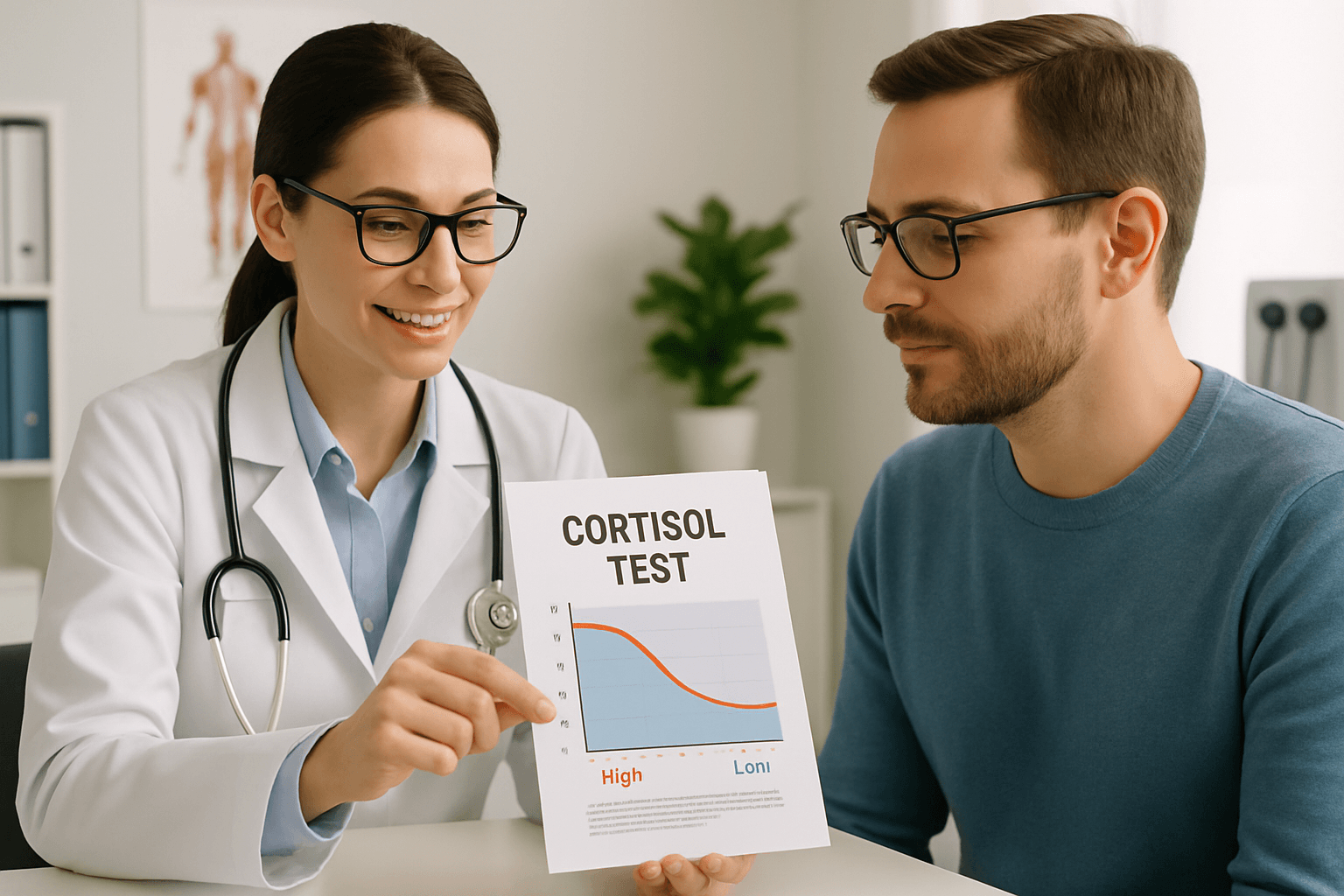
Properly interpreting cortisol test results with a professional is the first step toward balanced health.
Your Ultimate Guide to Interpreting Cortisol Test Results: 5 Key Insights

Key Takeaways
- **Interpreting cortisol test results** is more than just looking at a number; it involves understanding the context of time, sample type (blood/saliva), and your personal health.
- **High cortisol** often points to chronic stress and can lead to weight gain and fatigue. This is where lifestyle changes and targeted support become crucial.
- **Low cortisol** can indicate adrenal insufficiency (like Addison’s disease) and requires immediate medical attention.
- A single abnormal reading isn’t a diagnosis. **Interpreting cortisol test results** accurately often requires follow-up testing.
- If high cortisol is confirmed, science-backed solutions like **CortiSync** can be a powerful part of your management plan.
What’s Inside This Guide
- Why Accurate Interpretation Matters
- Insight 1: Understanding Normal Cortisol Ranges
- Insight 2: What High Cortisol Levels Really Mean
- Insight 3: The Meaning Behind Low Cortisol Levels
- Insight 4: Hidden Factors That Skew Your Results
- Insight 5: Your Action Plan After Interpreting Cortisol Test Results
- Frequently Asked Questions
You’ve taken the test, and now the report is in your hands. But what does it all mean? **Interpreting cortisol test results** can feel like trying to crack a code. This ultimate guide will break it down for you, revealing 5 key insights that will help you understand your numbers, have an informed conversation with your doctor, and take empowered steps toward better health.
Why Accurate Interpretation Matters
Cortisol is your body’s “stress hormone,” but it’s also a master regulator of your energy, metabolism, and immune system. Its levels are supposed to follow a natural 24-hour rhythm. Accurately **interpreting cortisol test results** is vital because it helps distinguish between a normal reaction to a stressful day and a chronic imbalance that could signal a condition like Cushing’s syndrome or Addison’s disease[1].
Insight 1: Understanding Normal Cortisol Ranges
The first step in **interpreting cortisol test results** is knowing what’s “normal.” These ranges can vary slightly by lab, so always check the reference range on your report. Here are typical values:
| Sample Type & Time | Typical “Normal” Range (Varies by Lab) |
|---|---|
| Blood (around 8 a.m.) | 6–23 mcg/dL |
| Blood (around 4 p.m.) | 3–15 mcg/dL |
| Saliva (late at night) | Less than 0.09 mcg/dL |
| 24-Hour Urine | 10–100 mcg per 24 hours |
[مكان مخصص للإنفوجرافيك: رسم بياني يوضح منحنى الكورتيزول الطبيعي على مدار 24 ساعة]
A visual guide showing cortisol levels peaking in the morning and dropping at night.
Insight 2: What High Cortisol Levels Really Mean
Seeing a high number can be alarming. When you are **interpreting cortisol test results**, high levels could mean:
- Chronic Stress: The most common reason. Your body is stuck in “fight or flight” mode.
- Cushing’s Syndrome: A rare condition, often caused by a tumor on the adrenal or pituitary gland[2].
- Medication Effects: Long-term use of corticosteroids can elevate levels.
- Other Health Issues: Conditions like depression or anxiety can also raise cortisol.
Insight 3: The Meaning Behind Low Cortisol Levels
Low cortisol is less common but requires serious attention. It might indicate:
- Addison’s Disease: An autoimmune condition where the adrenal glands can’t produce enough cortisol.
- Pituitary Gland Issues: The pituitary may not be sending the right signals to the adrenal glands.
- Abrupt Steroid Stoppage: Suddenly stopping steroid medication can cause a temporary crash.
Insight 4: Hidden Factors That Skew Your Results
Your results aren’t created in a vacuum. Proper **interpreting of cortisol test results** means considering these variables:
- Time of Day: A morning sample should be high; an evening one should be low.
- Poor Sleep or Illness: Both can temporarily disrupt your cortisol rhythm.
- The Test Itself: The stress of a blood draw can momentarily spike your cortisol.
- Medications: Birth control pills and other hormones can interfere.
Insight 5: Your Action Plan After Interpreting Cortisol Test Results
Your test results are a powerful tool, not a final verdict. Your next step is to discuss them with your healthcare provider. If high cortisol due to chronic stress is the primary issue, a comprehensive plan is your best bet.
A Targeted Solution for High Cortisol

If your results point to high cortisol from stress, **CortiSync** offers a science-backed approach. Its key ingredient, Sensoril® Ashwagandha, is clinically shown to help lower cortisol, reduce stress, and improve mental focus.
A good management plan often includes stress-reduction techniques, dietary changes, and sometimes targeted supplements like CortiSync to help your body regain balance more efficiently.
Watch: Understanding Your Stress Response
Frequently Asked Questions
- What is the most critical factor when interpreting cortisol test results?
- The most critical factor is context. A single number means little without knowing the time of day, the type of test, and your personal health situation. A multi-point saliva test showing your daily rhythm is often the most insightful for assessing functional stress.
- My morning cortisol result is high. Is this bad?
- Not necessarily. A high morning reading is a normal and healthy part of the Cortisol Awakening Response. The real question is whether it decreases throughout the day. A level that stays high in the evening is a red flag.
- What should I do first if my cortisol levels are high?
- Consult your doctor to rule out any underlying medical conditions. If stress is confirmed as the cause, they will guide you on lifestyle modifications. Solutions like CortiSync can be a valuable part of this comprehensive plan.
References & Further Reading
- Cortisol Test: Purpose, Types & Results – Cleveland Clinic[1]
- Cortisol Test – MedlinePlus[2]
- Stress, Cortisol, and Health – NCBI
Medical Disclaimer: This article is for informational purposes only and does not constitute medical advice. Always consult your healthcare professional for any medical decisions or treatment.
FDA & Affiliate Disclaimers: These statements have not been evaluated by the FDA. Products are not intended to diagnose, treat, cure, or prevent any disease. This page contains affiliate links (ID: 618161); we may earn a commission on purchases.
About the Author